
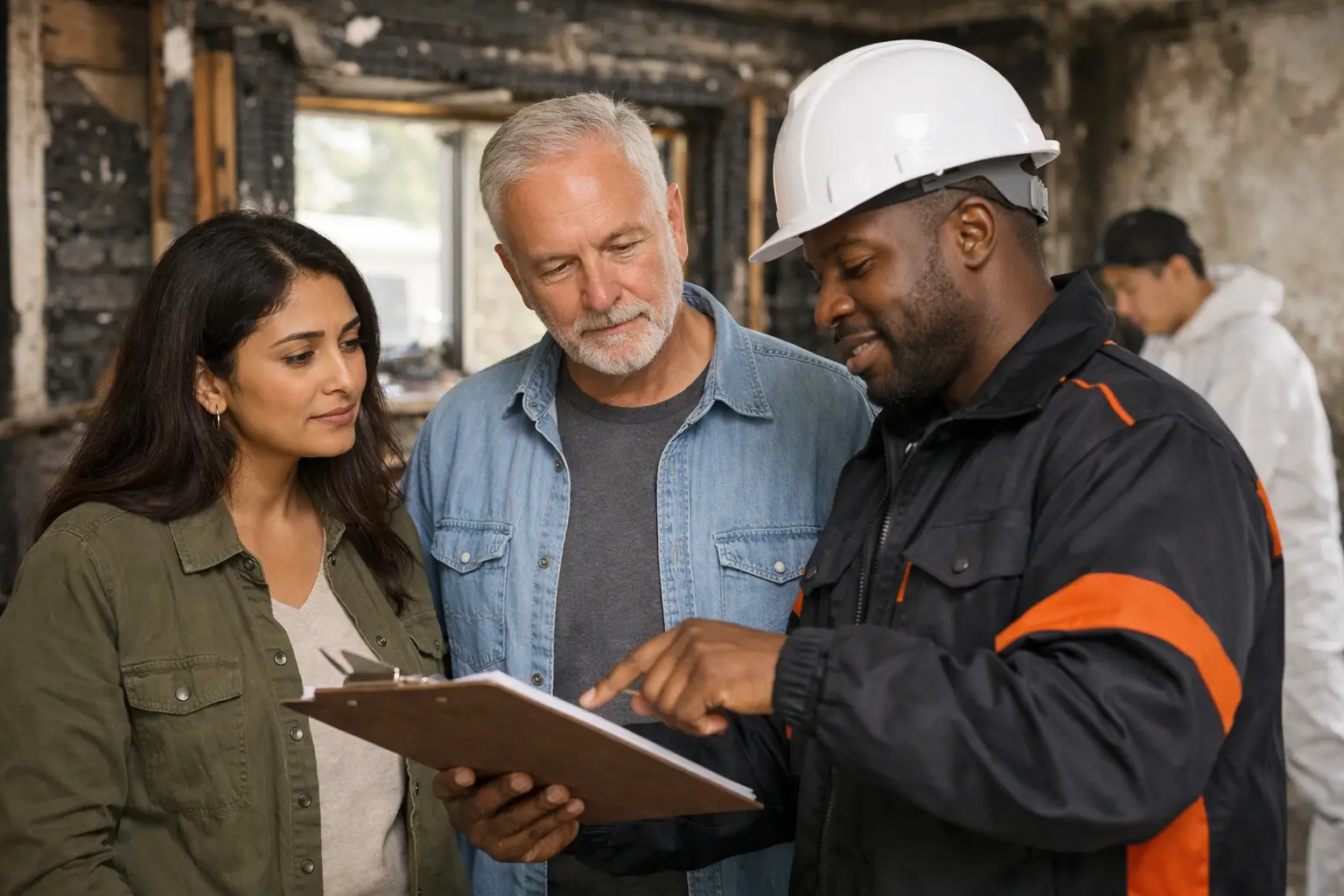
The first 24 hours after a fire are rarely calm. Even when the flames are out, the real damage keeps spreading through soot, smoke residue, water from suppression efforts, and exposed materials that continue to break down. That is why choosing the right fire damage restoration contractor matters so much. You are not just hiring someone to clean up debris. You are hiring a team to stabilize the property, protect what can be saved, and manage reconstruction with clear direction from start to finish.
For homeowners and property clients, the biggest risk is assuming fire restoration is only about cleaning. It is not. A proper recovery plan often includes emergency mitigation, selective demolition, odor control, structural assessment, code-related repairs, and full interior rebuild work. If those pieces are handled by separate vendors without strong oversight, delays and missed details become common very quickly.
What a fire damage restoration contractor actually does
A qualified fire damage restoration contractor should approach the project in phases, not as a rushed cleanup job. The first phase is stabilization. That can include boarding up openings, securing damaged areas, addressing water left behind by firefighting efforts, and preventing further contamination from soot and smoke.
The second phase is assessment and scope development. This is where experience matters. Fire can damage framing, insulation, drywall, flooring, cabinetry, electrical systems, HVAC components, and finishes in ways that are not obvious at first glance. Smoke also travels beyond the room where the fire started, often affecting wall cavities, ductwork, and adjoining spaces. A disciplined contractor documents the damage carefully and defines what can be restored, what must be removed, and what needs to be rebuilt.
The third phase is managed reconstruction. This is where many projects either regain order or fall apart. A contractor that can coordinate demolition, cleaning, framing, electrical, plumbing, drywall, flooring, painting, and finish work under one plan gives the client one line of accountability. That matters when decisions have to be made quickly and correctly.
Why managed execution matters after a fire
Fire restoration projects are stressful for a simple reason: they combine emergency response with construction. That creates a lot of moving parts. Materials may need to be removed immediately, but rebuilding cannot begin until the structure is safe, dry, and properly assessed. Insurance documentation may be part of the process. Occupancy, safety, and code compliance may also affect the schedule.
This is where structured oversight makes a real difference. When one contractor manages the sequence, clients are not left chasing separate trades or trying to figure out whether the electrician should come before insulation, or whether odor treatment should happen before finish materials are installed. The work follows a plan instead of becoming a series of reactions.
For larger repairs, a fire damage restoration contractor with renovation and rebuilding capability is often the better fit than a cleanup-only provider. Cleaning is only one part of the job. If the property needs walls reframed, plumbing rerouted, HVAC components replaced, or interior spaces rebuilt, the contractor needs to be able to carry the project through to final walkthrough.
How to evaluate a fire damage restoration contractor
The right contractor should be able to explain their process clearly. That sounds basic, but it is often the easiest way to tell whether a team runs organized projects or simply responds to damage one task at a time. Ask how they handle emergency stabilization, documentation, demolition, reconstruction planning, trade coordination, and communication.
You should also look for licensed and insured professionals with direct experience in both damage restoration and interior rebuild work. Fire projects are not standard remodels, but they do rely heavily on strong construction knowledge. A contractor who understands structural repairs, mechanical systems, finishes, and code requirements is better positioned to avoid scope gaps.
Communication standards matter just as much as technical skill. Clients recovering from fire damage do not need vague updates or shifting timelines. They need a contractor who provides clear expectations, explains decisions, and stays accountable when conditions change. Some delays are unavoidable in restoration work. Poor communication is not.
Red flags clients should watch for
One of the biggest red flags is a contractor who gives a firm price or timeline before a proper site assessment. Fire damage is rarely simple. Hidden smoke migration, water exposure, or structural compromise can change the scope significantly. A serious contractor will inspect thoroughly before making promises.
Another warning sign is fragmented responsibility. If one company handles cleanup, another handles demolition, and the client is expected to source rebuilding trades independently, the burden of coordination shifts back to the owner. That usually creates confusion around scheduling, scope, and accountability.
It is also worth being cautious with contractors who talk only about visible damage. Smoke odor, residue inside cavities, and damage to electrical or HVAC systems can have long-term consequences if overlooked. The goal is not just to make the space look restored. It is to make sure it is clean, safe, and properly rebuilt.
The trade-offs between speed and thoroughness
Every client wants to move fast after a fire, and that is understandable. Fast action during the stabilization phase is essential. But fast reconstruction without proper assessment can create bigger problems later. If charred materials remain hidden behind new finishes, or if smoke contamination is not fully addressed before rebuilding begins, the property may look repaired while underlying issues continue.
That said, thoroughness should not become an excuse for poor project control. A well-managed contractor knows how to move quickly where speed matters and slow down where verification matters. Emergency response, site protection, and moisture control should happen quickly. Scope confirmation, trade sequencing, and rebuild planning should happen carefully. Good contractors understand that both are necessary.
Fire restoration is also a rebuilding project
This is the point many clients realize too late. After a fire, you may not just need restoration services. You may need a general contractor capable of rebuilding interior spaces properly. That can include replacing kitchens, bathrooms, finished basements, flooring systems, trim packages, doors, drywall assemblies, lighting, and mechanical components.
If the property is occupied or partially occupied, planning becomes even more important. Dust control, safety barriers, material storage, and daily site management all affect how smoothly the work progresses. In residential settings, families need a contractor who can reduce disruption while keeping the project organized. In commercial interiors, schedule discipline and code compliance can affect whether operations resume on time.
This is where a contractor with strong project management stands apart. The work is not only about restoring materials. It is about restoring function, safety, and confidence in the space.
Questions worth asking before you hire
Ask who will be your direct point of contact. Ask how the scope will be documented and updated if hidden damage is found. Ask whether the contractor can handle both restoration and reconstruction or whether parts of the job will be handed off. Ask how trade scheduling is managed and how often you should expect progress updates.
You should also ask how they approach odor removal, demolition decisions, and code-related repairs. These are not minor details. They affect long-term results. A contractor who answers clearly and specifically is usually far easier to work with than one who stays general.
For property owners in Toronto and Scarborough dealing with significant interior fire damage, it often makes sense to prioritize contractors who already understand the demands of local residential and commercial construction work. Restoration does not happen in a vacuum. It ends in a rebuilt space that has to perform properly.
What the right contractor gives you
The best fire damage restoration contractor gives you more than labor. They give you structure during a chaotic situation. They help define the scope, protect the schedule, coordinate the trades, and keep the process moving with clear communication and managed execution.
That matters because fire recovery is not only about fixing damaged materials. It is about reducing uncertainty. When the contractor brings order to the work, clients can make decisions with better information and far less stress. That is the difference between a project that feels scattered and one that feels professionally handled.
If you are evaluating options after a fire, do not focus only on who can arrive first. Focus on who can take responsibility for the full process and carry the project all the way through with discipline. In restoration work, control is not a luxury. It is part of the repair.
